All work

Case study

Store Details
Migration

Role Senior Content Designer
Company Shopify
Duration Nov 2022 – May 2023
Team Content · UX · Product · Engineering
Store Details Migration

Integrating Plus Store Details into the main admin — without losing a thing.

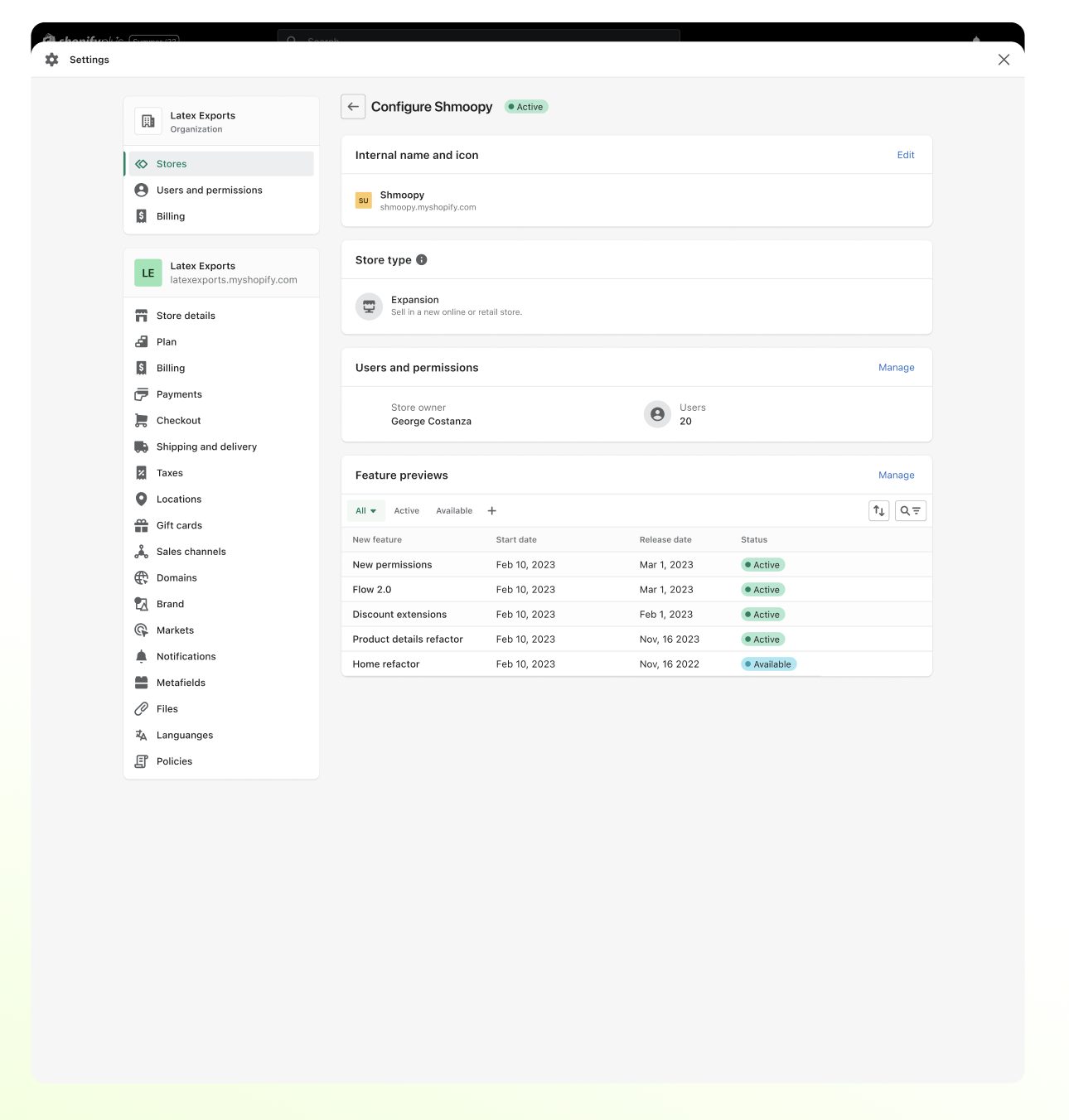
The Shopify Plus Admin had its own Store Details page — a legacy surface that had grown disconnected from the main Shopify admin over time. As part of the broader Plus migration, we needed to consolidate it into a single, unified settings experience.

The challenge wasn't just technical. The two surfaces had accumulated duplicate content, conflicting hierarchies, and a blurred line between organization-level settings and store-level settings. Getting this right meant untangling years of compounded decisions — and building a framework that would hold up as Shopify continued to scale.

I led content design across the full project, from discovery through to delivery — owning the content audit, the guiding principles framework, and the final shipped copy.
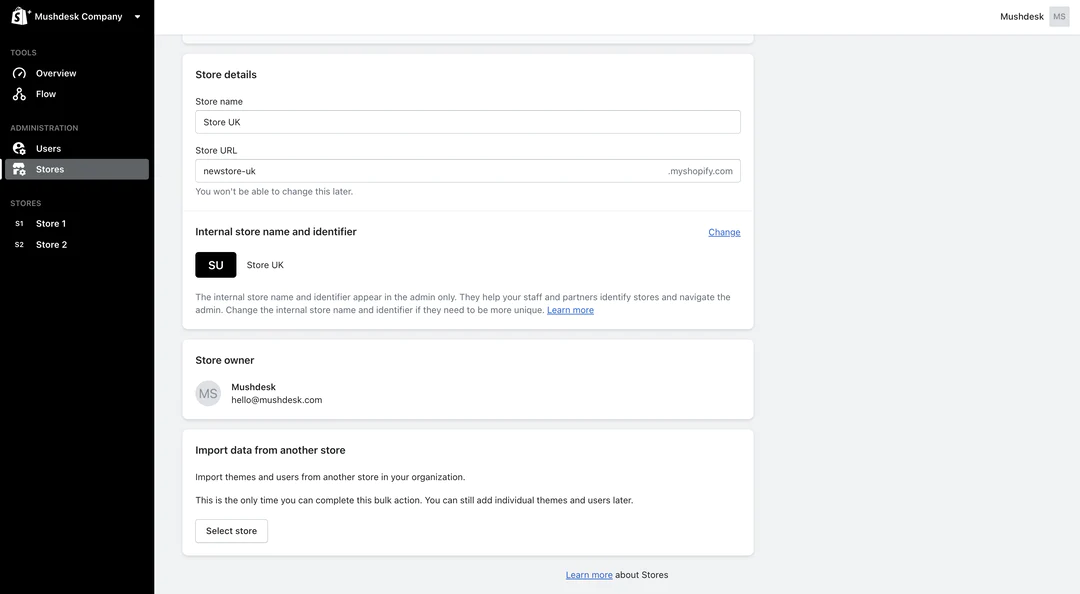
Duplicate content.
Technical constraints.

Integrating the Plus Store Details page into the main admin posed a specific challenge: two pages existed that covered much of the same ground, but from different angles. One lived at the organization level, one at the store level — and neither drew a clear line between them.

The guiding principles for the migration were clear from the start: build scalable products, improve navigation and hierarchy, and — the thorniest one — avoid duplication.

Organization level
Organization — old Plus Admin
Store level
Single store — old settings

01

Duplicate content

Store Details existed in both the Plus Admin and the main Shopify admin, with overlapping fields and inconsistent labeling. Merchants encountered the same information in two places.

02

Unclear hierarchy

There was no clear distinction between settings that applied to the whole organization versus settings that applied to a single store. The two surfaces conflated both.

03

Technical constraints

Removing the duplicate page wasn't just a content decision — it required aligning with engineering on what could move, what needed to stay, and how to sequence the transition without disrupting merchants.

04

Scalability risk

Without a clear principle for what belongs at the org level vs. the store level, every new feature added after migration would face the same ambiguity — making the problem worse over time.

Discovery. Ideation. Delivery.

01 Discovery

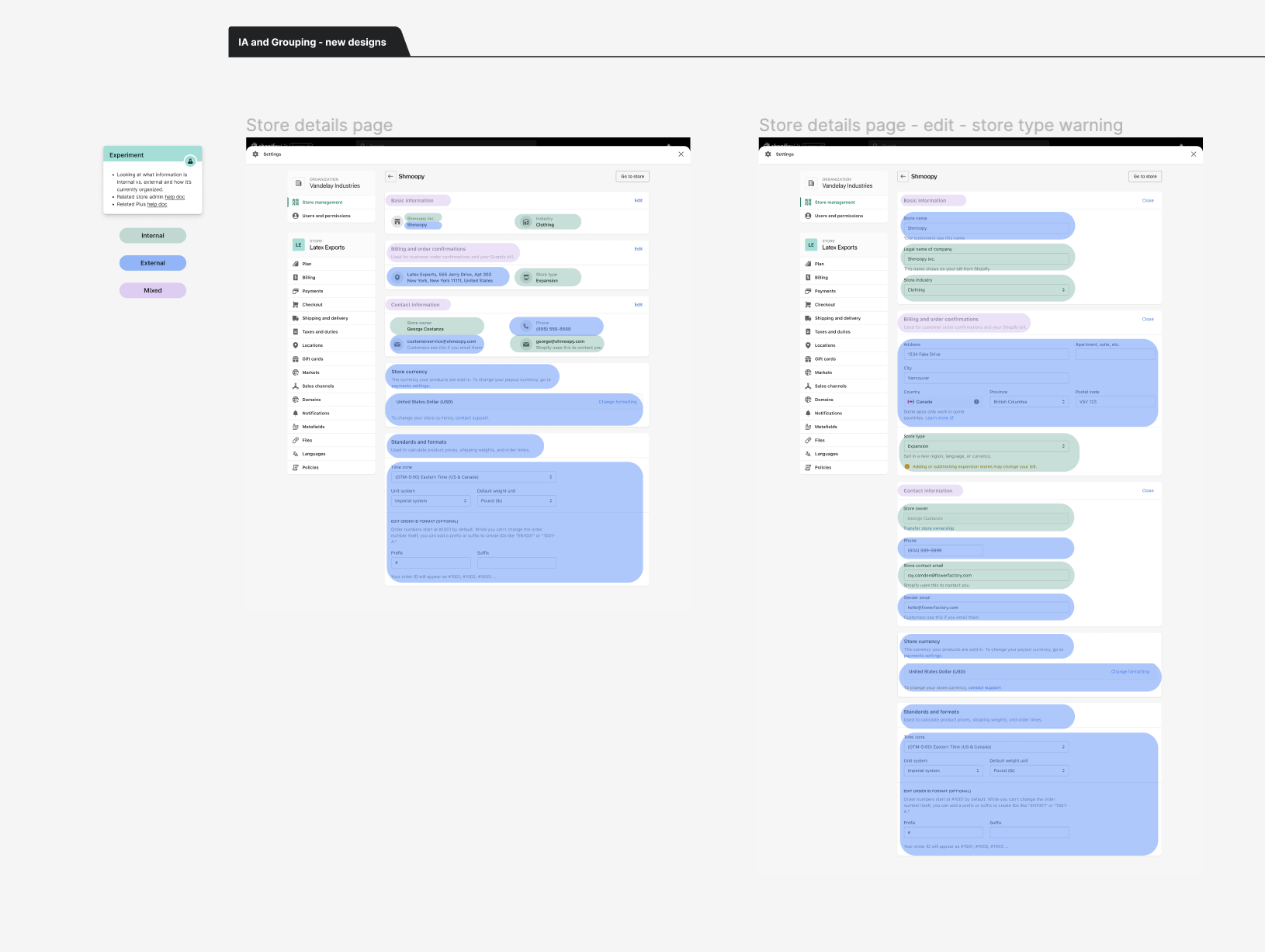
Research with MSMs, feature audit, content audit to map internal vs. external information.

02 Ideation

Design jams, naming exploration, page hierarchy options with questions, rationale, and decisions.

03 Delivery

Governance framework, North Star direction, guiding principles, MVP release, and measurement.

Discovery started with the people who knew the pain best — Merchant Success Managers. Their day-to-day support interactions gave us a ground-level view of where merchants got confused, what they couldn't find, and what they kept asking for help with.

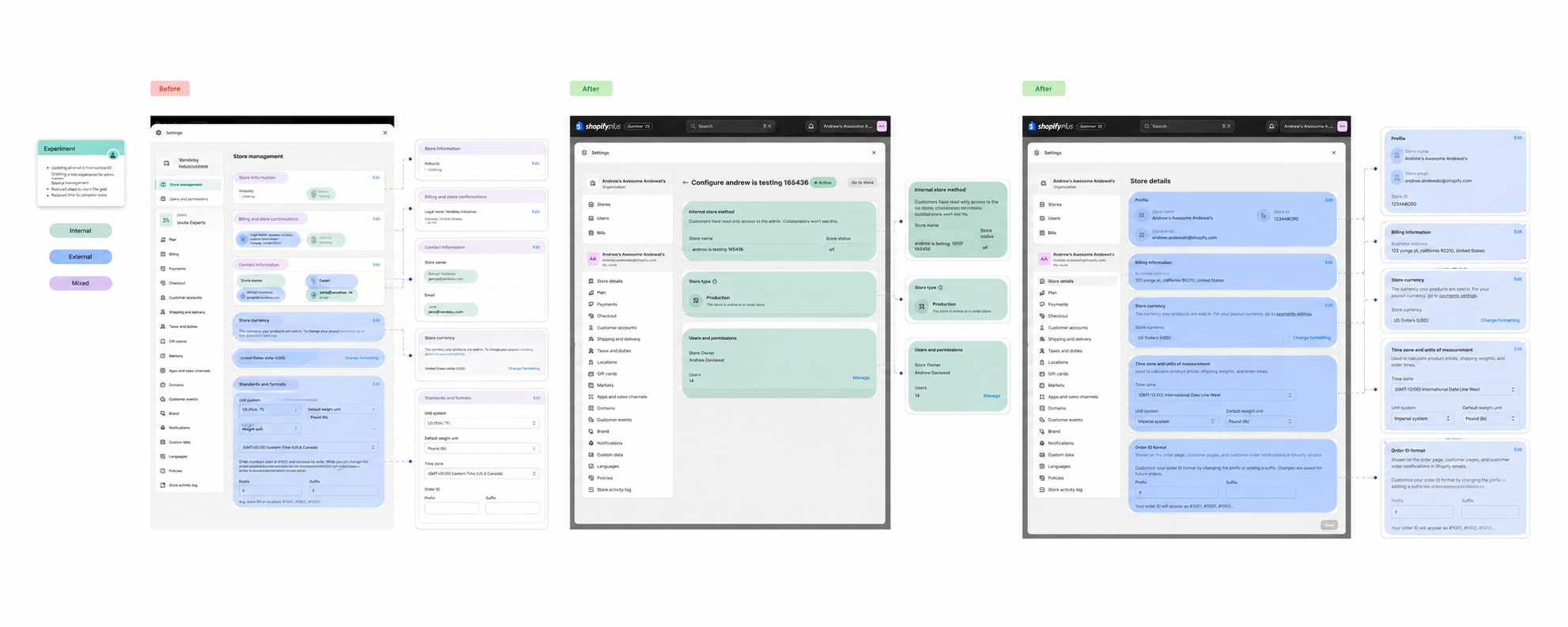
We ran a feature audit comparing the Store Details pages at both the store and org levels, and a content audit to separate what was internal-facing from what was external and buyer-facing. This gave us the raw material to make real decisions about what should move, what should stay, and what should be cut entirely.

Discovery
Feature audit + content audit artifacts

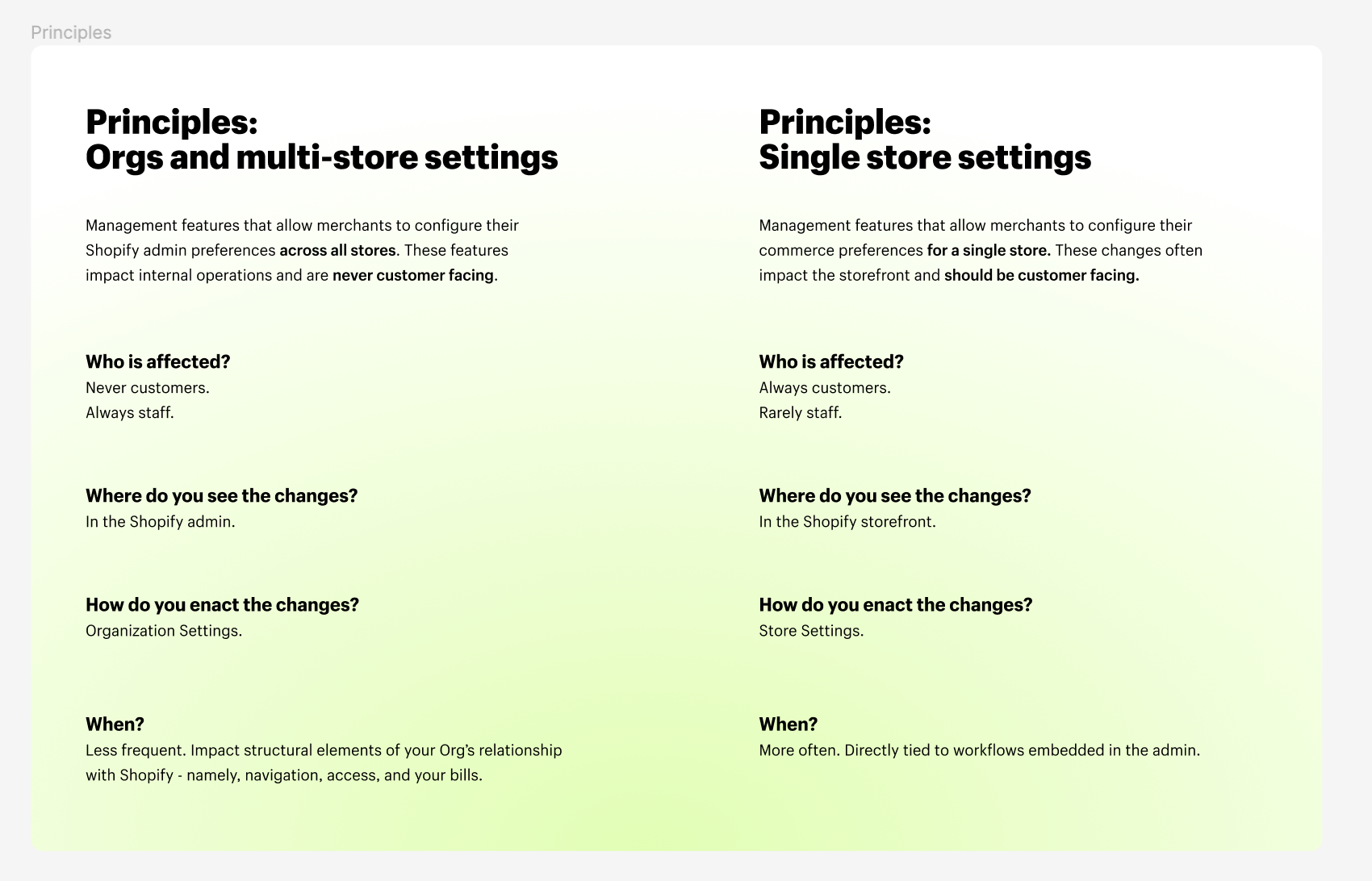
The principles that held everything together

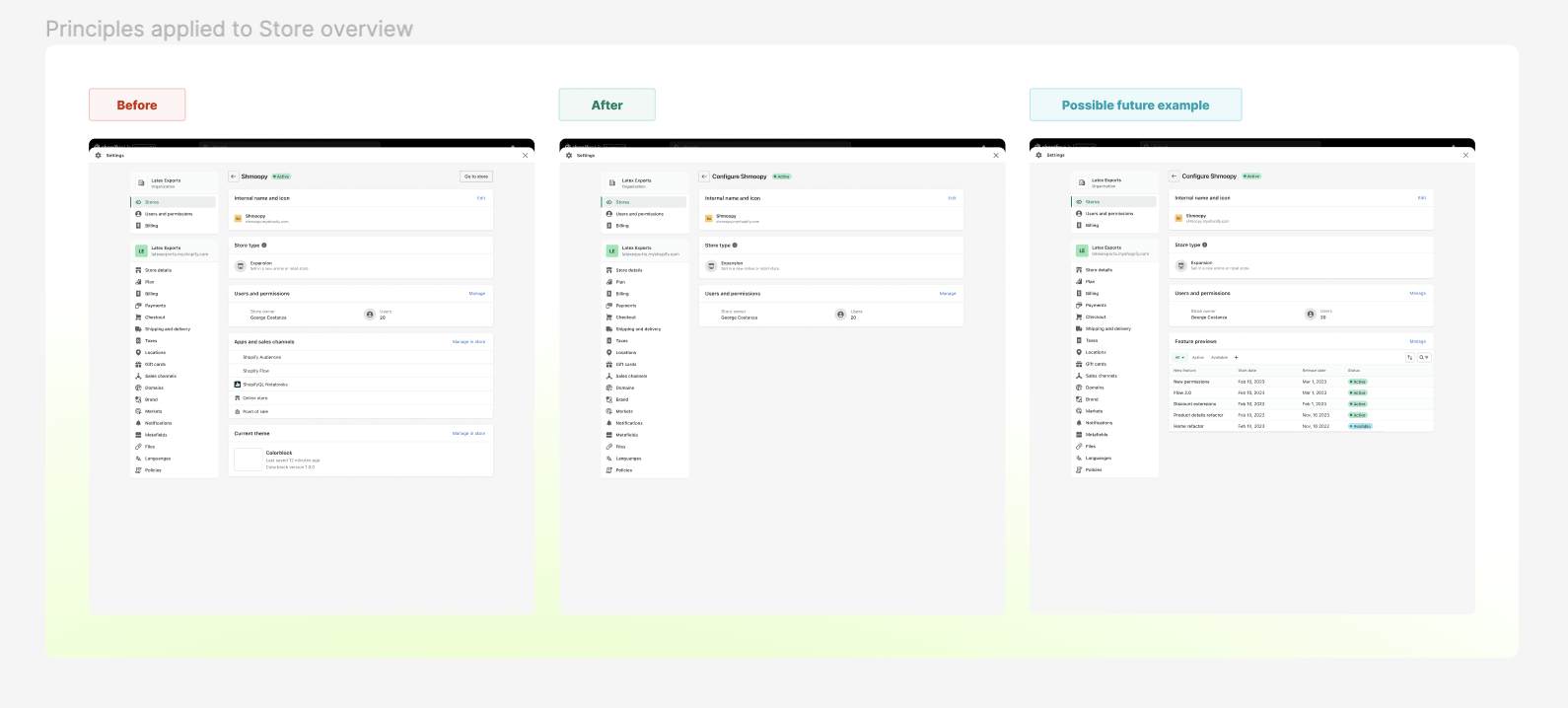
The most important output of the ideation phase wasn't a design — it was a set of guiding principles for what belongs at the organization level versus the store level. These were published internally, received approval from the VP of UX, and became the framework for every settings decision that followed.

Organization settings

Features that configure admin preferences across all stores.

Who is affected?

Never customers. Always staff.

Where do changes appear?

In the Shopify admin.

When?

Less frequent. Structural — access, navigation, billing.

Store settings

Features that configure commerce preferences for a single store.

Who is affected?

Always customers. Rarely staff.

Where do changes appear?

In the Shopify storefront.

When?

More often. Directly tied to buyer-facing workflows.

Ideation
Design jams + naming exploration
Delivery
Final guiding principles doc

A unified settings experience — built to scale.

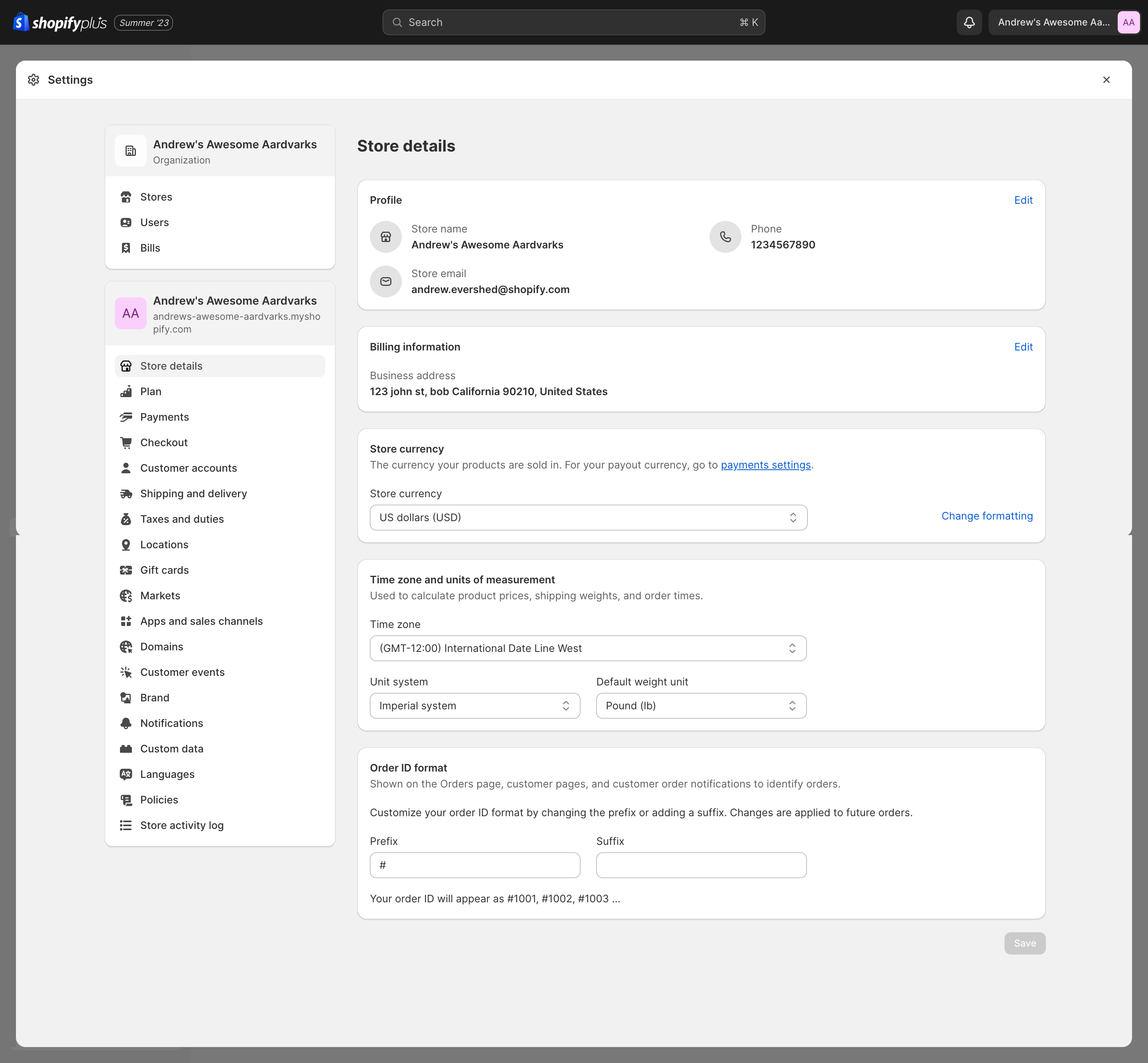
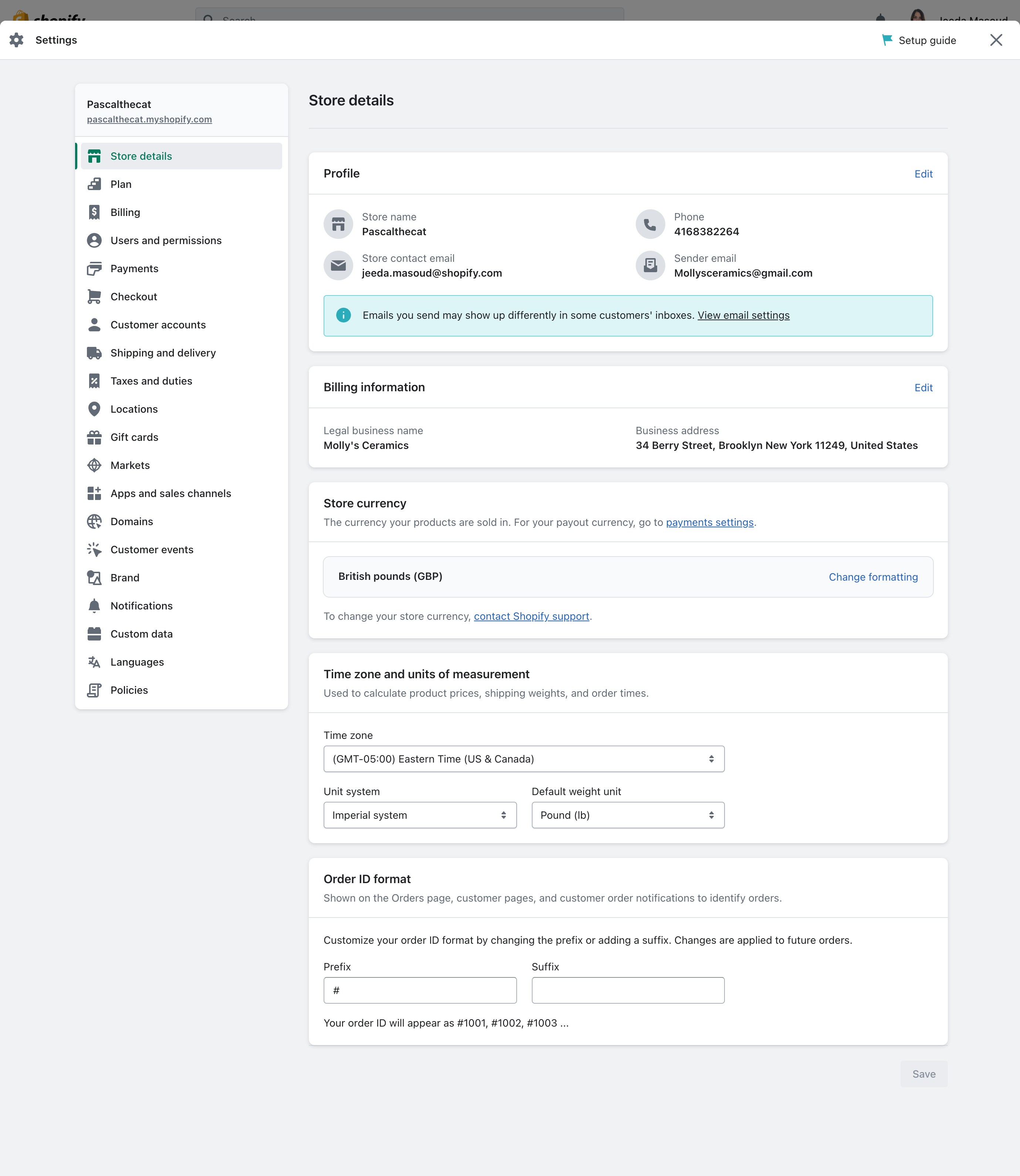
After design jams, naming explorations, multiple wireframe iterations, and stakeholder alignment — we shipped a consolidated Store Details experience that drew a clean line between org-level and store-level settings for the first time.

After — Store details
New Shopify Store Details page
After — Organization
New org-level settings page

01

Clear content structure

Consistent labeling, card hierarchy, and help text across the settings surface. Buyer-facing details audited and separated from internal admin preferences.

02

New org settings

Organization-level settings now live in their own dedicated surface — admin preferences, access, and billing that apply across all stores, never customer-facing.

03

Scalable foundation

The guiding principles framework means every future feature has a home. New settings can be confidently placed at the right level without relitigating the same hierarchy decisions.

Delivery — Automation
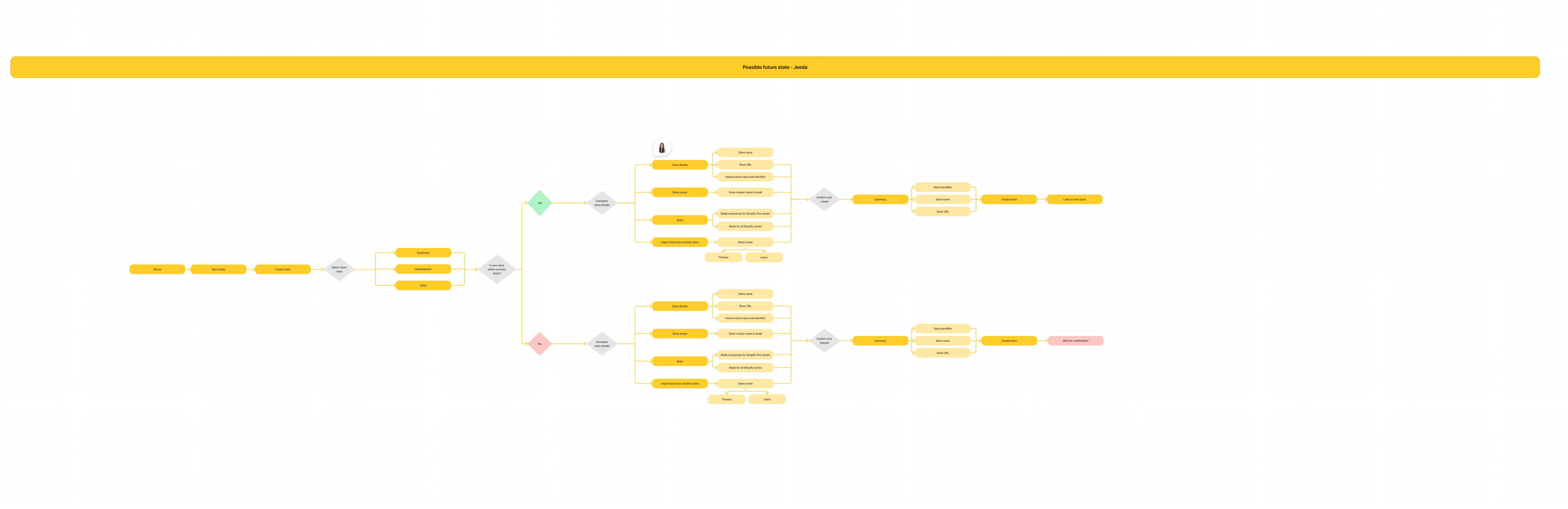
Future states + new store creation automation flow

100% of Plus merchants migrated.

New org settings

100% of Plus merchants successfully migrated to the new unified admin experience with zero disruption to live stores.

Return rate

XX% of users staying on the new experience — to be updated with final figures.

MSM support reduction

XX% reduction in Merchant Success Manager support tickets related to settings navigation and hierarchy confusion.

Broader impact

Guiding principles approved by the VP of UX

  • Published internally and adopted as the framework for all future settings decisions across Shopify admin
  • Build scalable products — new features now have a clear home at org or store level from day one
  • Improve navigation and hierarchy — the clear delineation reduces cognitive load for merchants managing complex organizations
  • Avoid duplication — the duplicate Store Details page is gone, and the principles ensure it won't come back

Reflection

The most lasting work I did on this project wasn't the copy — it was the framework. Writing guiding principles that got VP approval and became a reference point for the whole team is a reminder that content design at its best shapes how a system thinks, not just how it reads. That kind of upstream influence is what I keep reaching for.