All work

Case study

Shopify Plus
Migration

Role Senior Content Designer
Company Shopify
Duration 2021 – 2023
Shipped July 2023
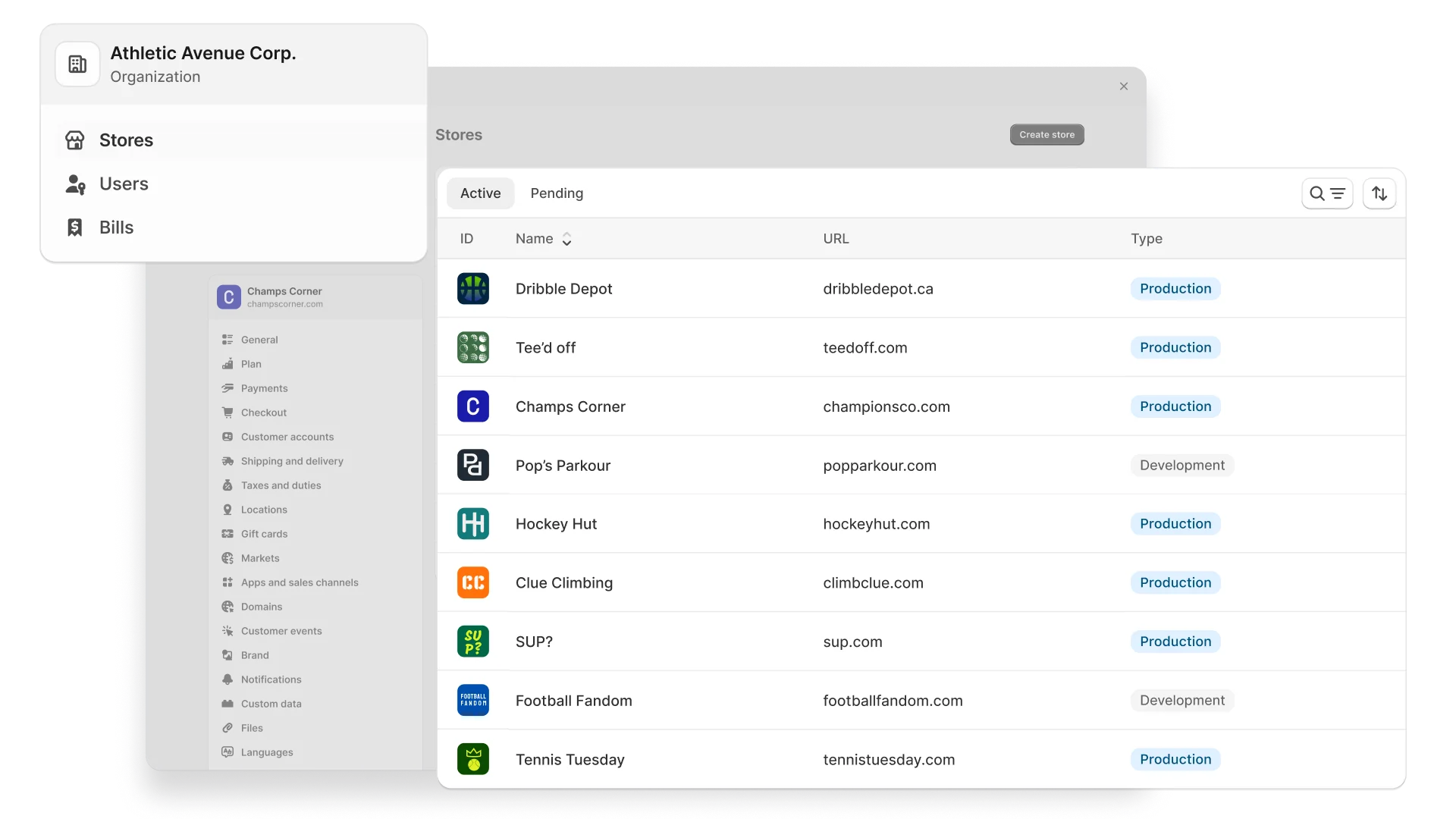
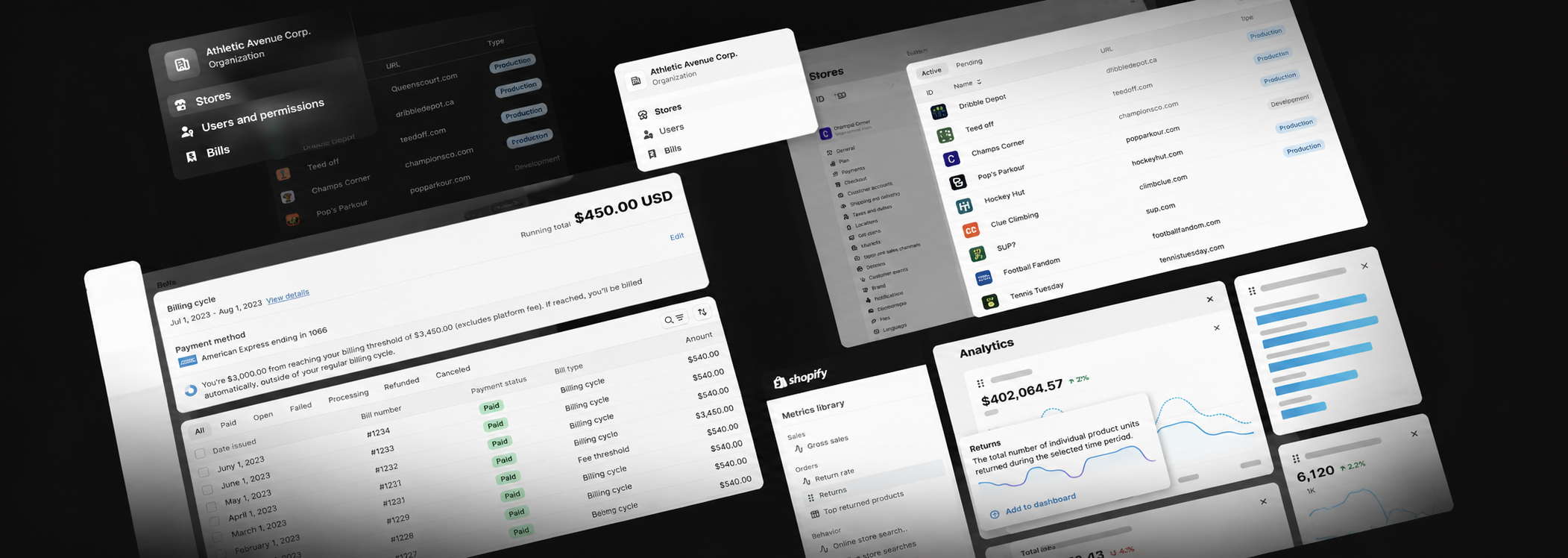
Shopify Plus Admin — screens collage

Making it easier to manage multi-store organizations — faster than ever before.

The Shopify Plus Admin was built to help high-growth merchants manage multi-store organizations — but over two years, it had become a liability. Page load times averaged 27+ seconds. Store creation errors ran at 34%. Analytics adoption sat at just 15%.

Merchants were jumping between multiple tabs and admins just to complete basic daily tasks. This project was a full migration: taking the separate Plus Admin and integrating it into the main Shopify Admin in a way that was faster, clearer, and built to scale.

I was embedded as Senior Content Designer within a cross-functional team of UX, Product, Engineering, Data, and Marketing — owning content and product design across the migration from discovery through to launch.
27+ Second avg. page load time
34% Store creation error rate
15% Analytics feature adoption

The Plus admin needed a refresh.

The Plus admin had started as a focused tool for enterprise merchants. As Shopify's merchant base grew in complexity, so did the admin — but without a coherent information architecture to support it. Three things made this untenable.

Problem — Before state
Shopify Plus Admin — original state

01

Separate surfaces

Merchants had to open one admin for organization-level workflows and multiple tabs for store-level management. There was no single source of truth.

02

Feature findability

Merchants couldn't locate what they needed. Navigation had grown organically, not intentionally — and content had followed suit, creating dead ends and confusion.

03

Information overload

The settings surface mixed internal business configurations with buyer-facing storefront details, creating cognitive confusion at every step.

04

Automation gaps

Contract management required manual work from Merchant Success Managers. A significant opportunity to reduce support load and create self-serve capabilities.

Research. Audit. Design. Align. Build.

01 Research
02 Audit
03 Design
04 Align
05 Build

We conducted 12 moderated merchant interviews and 4 Merchant Success Manager interviews, supplemented by alignment sessions with senior leadership. Four clear pain points emerged, shaping two primary personas: Janet, the power user managing multi-store org-level features, and Joseph, the store staff focused on store-level workflows.

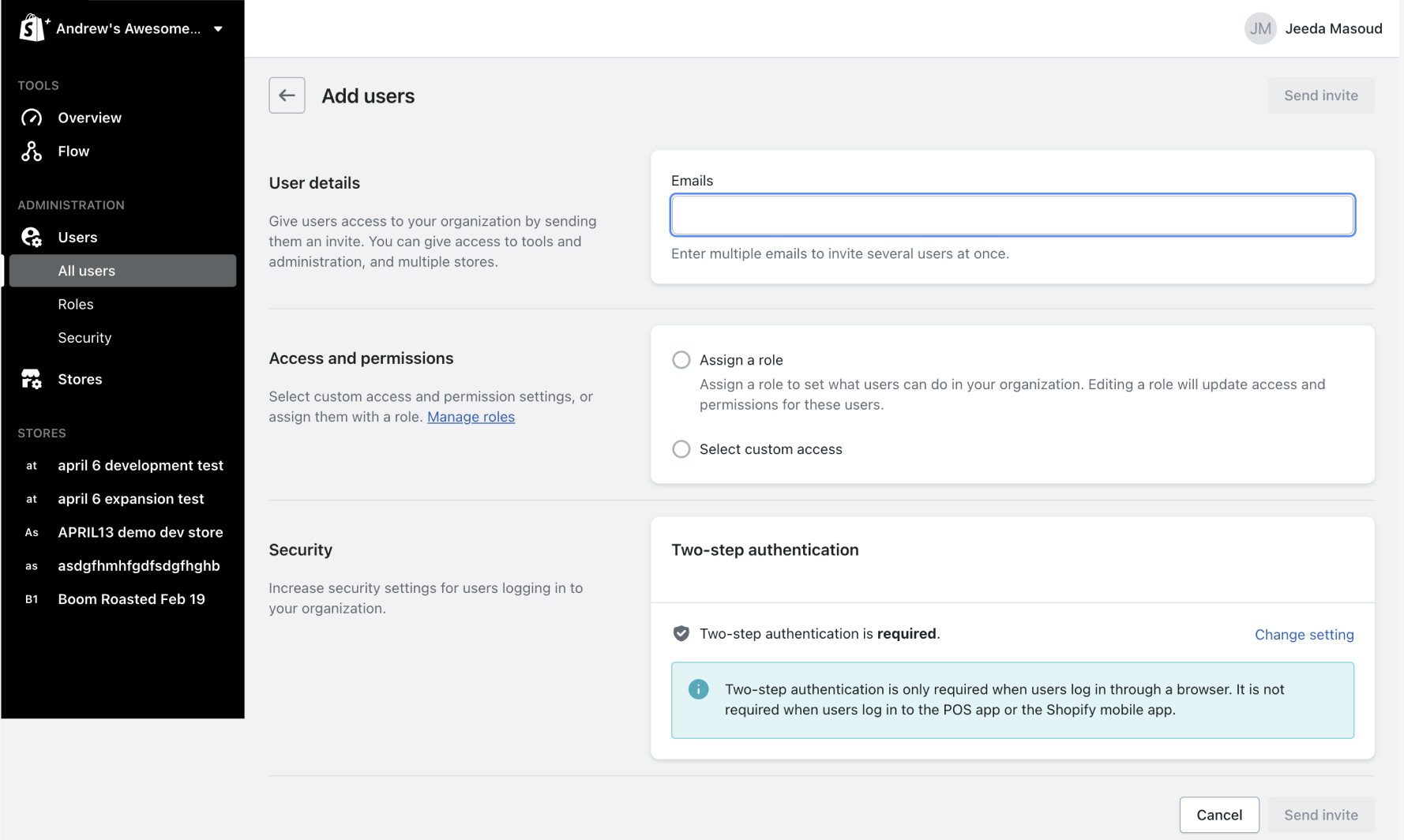
I led a full content and email audit alongside Product and Engineering — mapping every transactional touchpoint in the invite and access flow, identifying gaps, inconsistencies, and redundancies across success and failure states.

Hierarchy & naming

One of the core content challenges was hierarchy. Org-level and store-level settings had been conflated for years. I developed a clear distinction framework that became the structural principle guiding everything — where features lived, how navigation was named, and how we communicated the difference to merchants.

Organization settings

Features that configure admin preferences across all stores.

Who is affected?

Never customers. Always staff.

Where do you see changes?

In the Shopify admin.

When?

Less frequent. Structural — access, navigation, billing.

Store settings

Features that configure commerce preferences for a single store.

Who is affected?

Always customers. Rarely staff.

Where do you see changes?

In the Shopify storefront.

When?

More often. Directly tied to buyer-facing workflows.

Two models, one decision

Model A

Admin Navigation
Organization
Commerce
vs.

Model B Selected

Admin Navigation
Commerce
Organization

Content decision

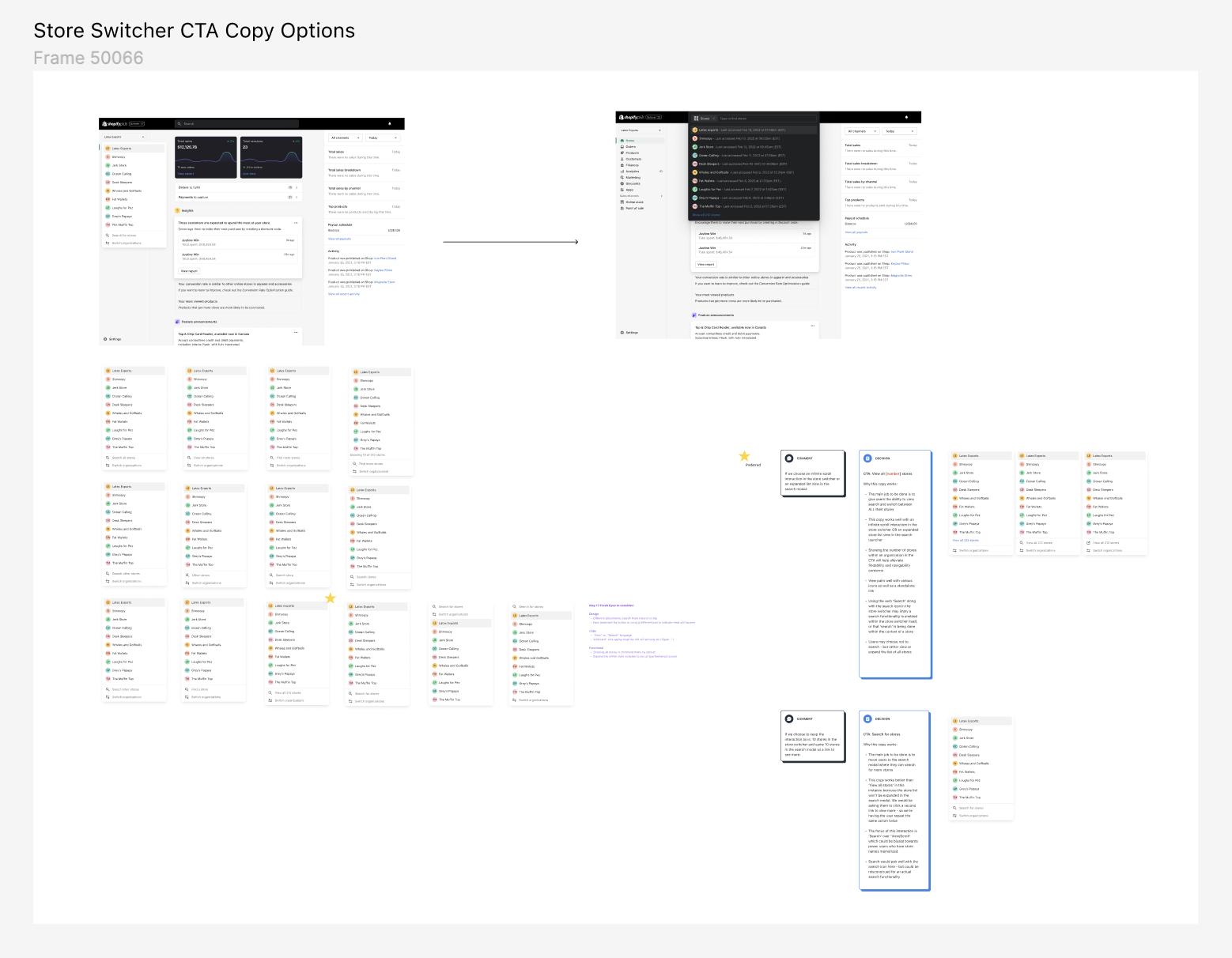
"View [number] stores"

Why this copy works

  • The main job is to give users the ability to view, search, and switch between all their stores
  • Works with both infinite scroll and an expanded store list view in the search launcher
  • Showing the number of stores reinforces findability and navigability for merchants managing large orgs
  • Pairs cleanly with icons or as a standalone link
  • Users may choose to browse rather than search — this CTA accommodates both behaviours
Email audit
Email audit — invite flows
Wireframes
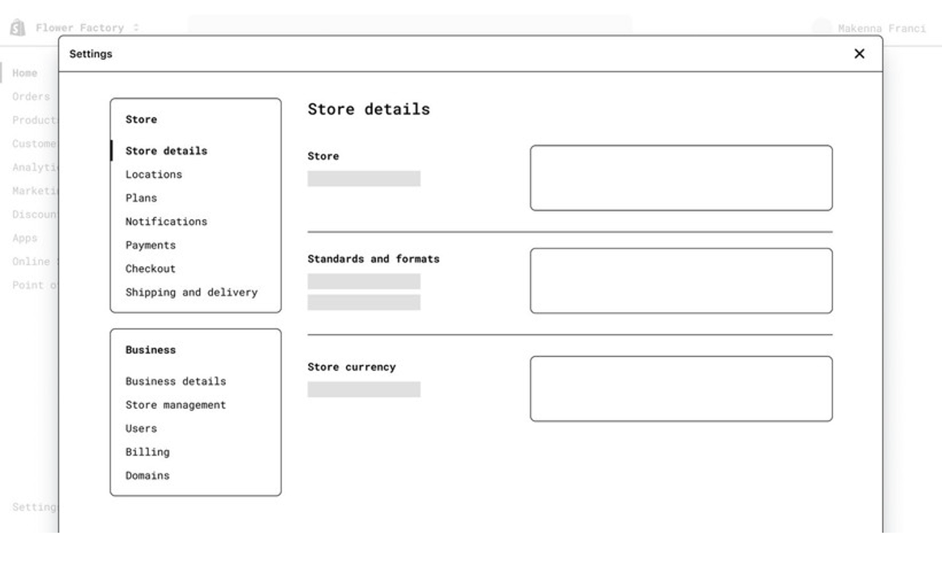
Low-fidelity wireframes

So what happened?

After speaking to numerous merchants, going through multiple rounds of UX reviews, iterating on content and design, building new tech, and releasing to Plus merchants — here's what we shipped.

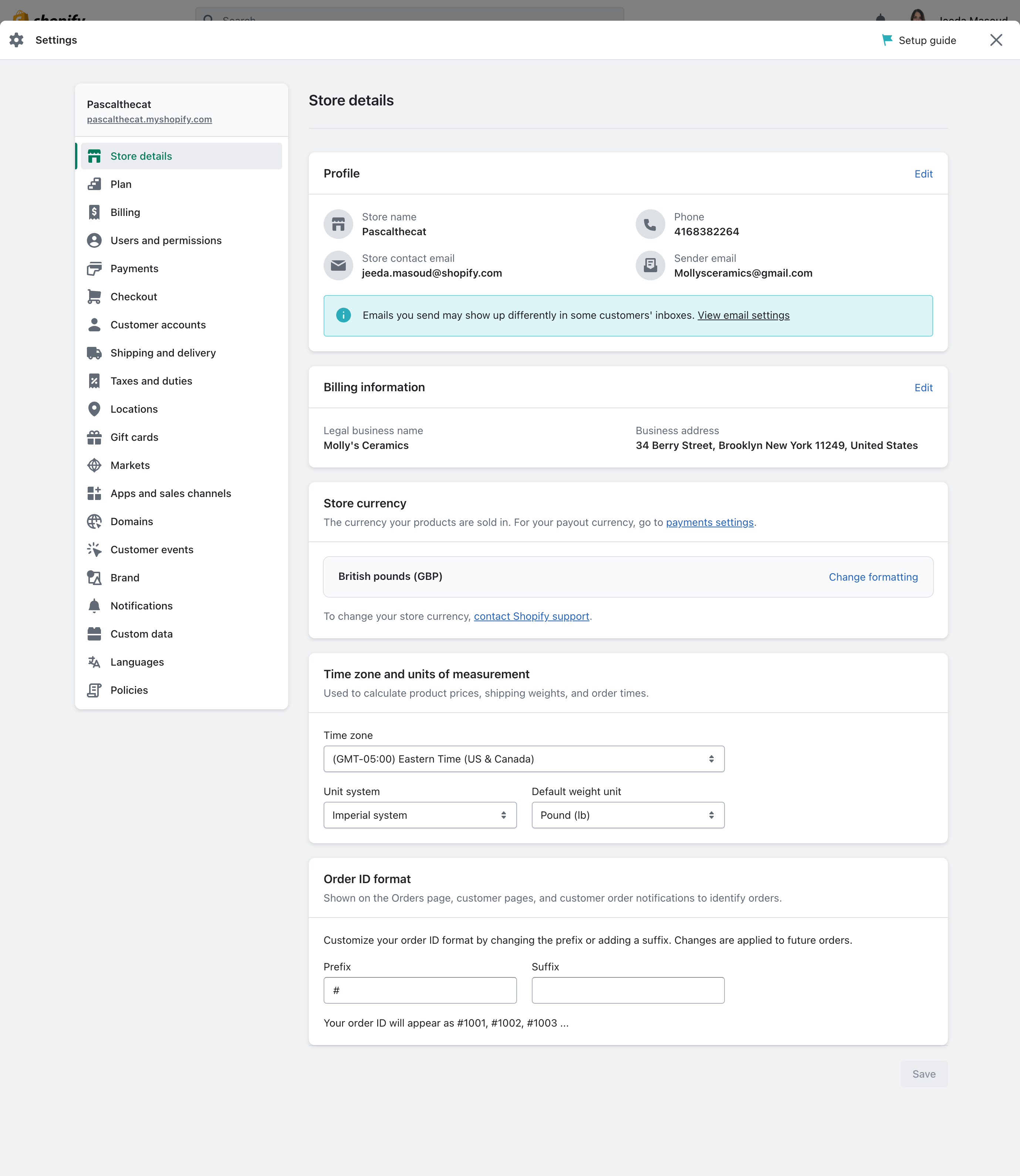
Before
Old Plus Admin settings
After
New unified admin settings

01

Redesigned settings

Clear labeling, iconography, and customizable internal identifiers. No page duplication. Centralized management and faster workflows across the board.

02

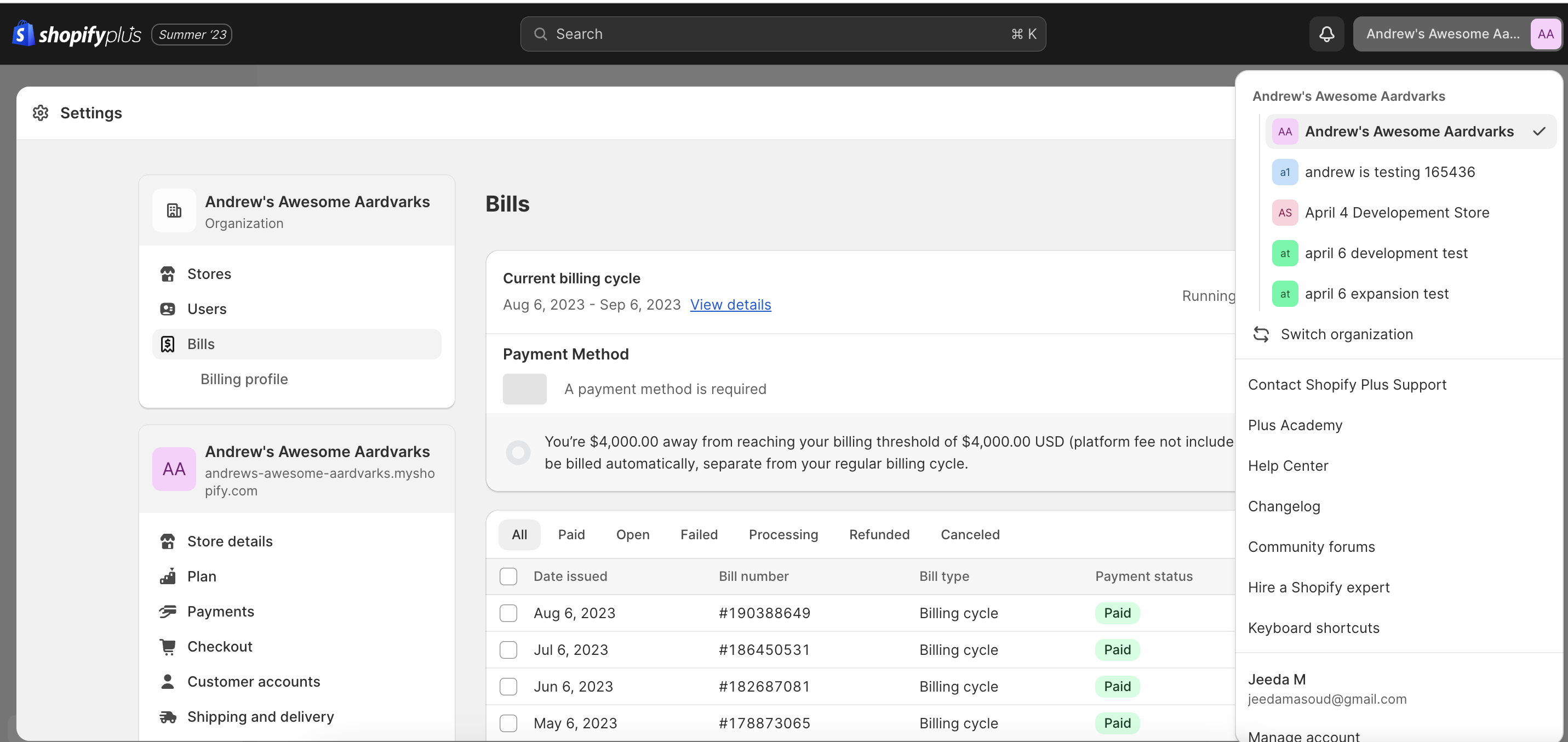
New navigation

An account dropdown giving merchants a consolidated view of all their stores with quick-switch access — removing the need to juggle multiple tabs.

03

Simplified content

A clear split between system preferences and storefront details. Merchants no longer have to switch between forms that configure internal admin preferences vs. buyer experience.

After — New navigation
New account dropdown + store switcher

The uplifted experience helps merchants efficiently manage their Plus organization.

Improved workflows

Reduction in Merchant Success Manager support requests. Merchants can now complete multi-store tasks without leaving the unified admin.

Speed

Page load times significantly improved from the 27+ second baseline. The new integrated admin remains available with zero disruption during the transition.

Scalability

New multi-store experiences are now being actively built on the foundation — org-level billing, sensitive permissions, role creation, and analytics.

Reflection

Content design at the platform level isn't about individual strings — it's about building shared language that holds across an entire system. The hierarchy framework I developed for Organization vs. Store Settings became a reference point for the broader team, not just a UI label. That kind of upstream content work, done early enough to influence structure rather than polish copy, is where I do my best work.